What are the differences between the Elegant trampolines from EXIT Toys?
Are you interested in the EXIT Elegant trampoline? Read about the differences between the EXIT Elegant and Elegant Premium trampoline in the EXIT Toys blog.
Quality labels and norms for outdoor toys: TÜV and Intertek testing, EN standards, GS, CE and FSC®. Read what these labels stand for and how the EXIT protocol fits in, so you know what to look for when comparing outdoor toys.
Originally published: February 2023
Updated: October 2026
A trampoline, wooden playhouse, swing or water track makes outdoor play even more fun. When choosing outdoor toys, you’ll come across various labels, standards and markings. But what do they actually tell you?
EN 71, GS, CE, UKCA and FSC® each mean something different. A standard, for example, is not the same as a certification mark. EXIT Toys explains the differences so you know what to look for when checking labels on outdoor toys.
Testing organisations such as TÜV organisations and Intertek can test and certify products. They assess a product against specific requirements. The properties examined depend on the test carried out and the accompanying certificate.
Testing by an external organisation is not compulsory for every toy. However, the manufacturer must assess whether the toy meets the applicable legal safety requirements. The assessment procedure required depends, among other things, on the toy and the standards the manufacturer applies.
If you see a certification mark from a testing organisation, check what it covers. A mark like this is not a general guarantee covering every aspect of a product.
EN stands for European standard. The EN 71 series consists of several standards for toy safety. These cover areas such as mechanical and physical properties, flammability and certain chemical properties. The parts that apply depend on the toy.
A standard sets out requirements and test methods; it is not a certification mark that a product automatically receives after testing. Applying the relevant standards can help a manufacturer demonstrate that a toy meets the corresponding legal safety requirements. The standards and assessment procedure used must be appropriate for the market where the toy is sold.
The number EN 71 refers to the series of standards; an addition, such as EN 71-1, refers to a specific part. For more information about standards and conformity assessment in Great Britain, see the UK government’s toy safety guidance.
GS stands for Geprüfte Sicherheit, meaning ‘tested safety’. It is a voluntary certification mark under the German Product Safety Act. An authorised, independent GS body examines a product type and monitors production to assess whether the manufactured products match the tested type.
The GS mark covers the safety aspects assessed. It is not a general quality guarantee and, on its own, says nothing about a product’s lifespan or performance. Nor does it replace the conformity marking required for the market where the toy is sold, such as CE or UKCA.
With CE marking, the manufacturer declares, under its own responsibility, that the product complies with the applicable EU legislation requiring this marking. UKCA marking is the equivalent declaration of conformity with the applicable requirements in Great Britain. Toys can be placed on the market in Great Britain, which comprises England, Scotland and Wales, using either CE or UKCA marking, provided the relevant requirements are met.
Northern Ireland has different rules. CE marking is required for toys there. Where mandatory third-party conformity assessment is carried out by a UK body, CE must be accompanied by the UKNI marking. UKCA alone is not sufficient for Northern Ireland. Read the UK government’s guidance for toys in Northern Ireland.
Neither CE nor UKCA is an independent quality mark or a safety standard like those in the EN 71 series. These markings do not automatically mean that an external testing organisation has tested the product. Meeting a legal marking requirement is not an additional benefit compared with other toys subject to the same requirement.
The FSC® label concerns the origin of forest-based materials, such as wood and paper, and the associated certification. It is not a toy safety mark. There are three types of label:
FSC® forest management certification includes requirements relating to nature, working conditions and the rights of local communities, among other things. Chain of Custody certification checks how certified material and the associated claims are managed throughout the supply chain.
Check the specific FSC® label on a product and the material or component it applies to. An FSC® label on a wooden component does not automatically tell you anything about other materials in the product or the environmental impact of the product as a whole. You can also read FSC®’s explanation of its three labels.
A test protocol describes how particular properties of a product are tested. It is not the same as an independent certification mark and does not replace the applicable legal safety requirements. Would you like to know which tests or standards apply to a specific EXIT product? Please contact us.
Do you have any questions about certification marks, markings or standards for your outdoor toys? We’re happy to help. Contact us via chat, call 808 - 1893980 or email info@exittoys.com.

Are you interested in the EXIT Elegant trampoline? Read about the differences between the EXIT Elegant and Elegant Premium trampoline in the EXIT Toys blog.
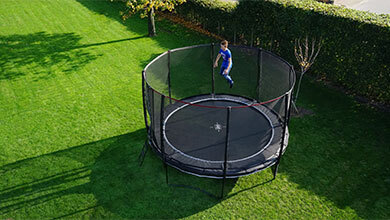
Not sure whether to go for a round or rectangular trampoline? In this blog from EXIT Toys we explain what you should consider when choosing the right shape.
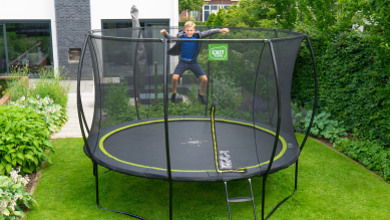
Before purchasing the trampoline, it is important to know whether you want to dug-in the trampoline or not. Read why in this EXIT Toys blog.
Our website uses cookies. We use functional, analytical, and tracking cookies to analyze traffic on our website and personalize content. This allows us to improve the user experience on the website.
By clicking 'Customize', you can learn more about the specific types of cookies and customize your preferences. By clicking 'Allow all cookies', you agree to the use of all cookies. You can find more information in our cookie policy.
For more information on how Google will use your personal data, please refer to Google's Privacy & Terms.
Stay informed about interesting offers and news!